How to Tell if Silver Is Real: The 925 Hallmark Explained
Par Dubai Silver · · 3 min de lecture
Silver-coloured jewellery is everywhere, and a lot of it contains no silver at all. The good news: real sterling silver is easy to recognise once you know what to look for. Here is what the famous 925 stamp means and how to check a piece yourself.
What "925" means
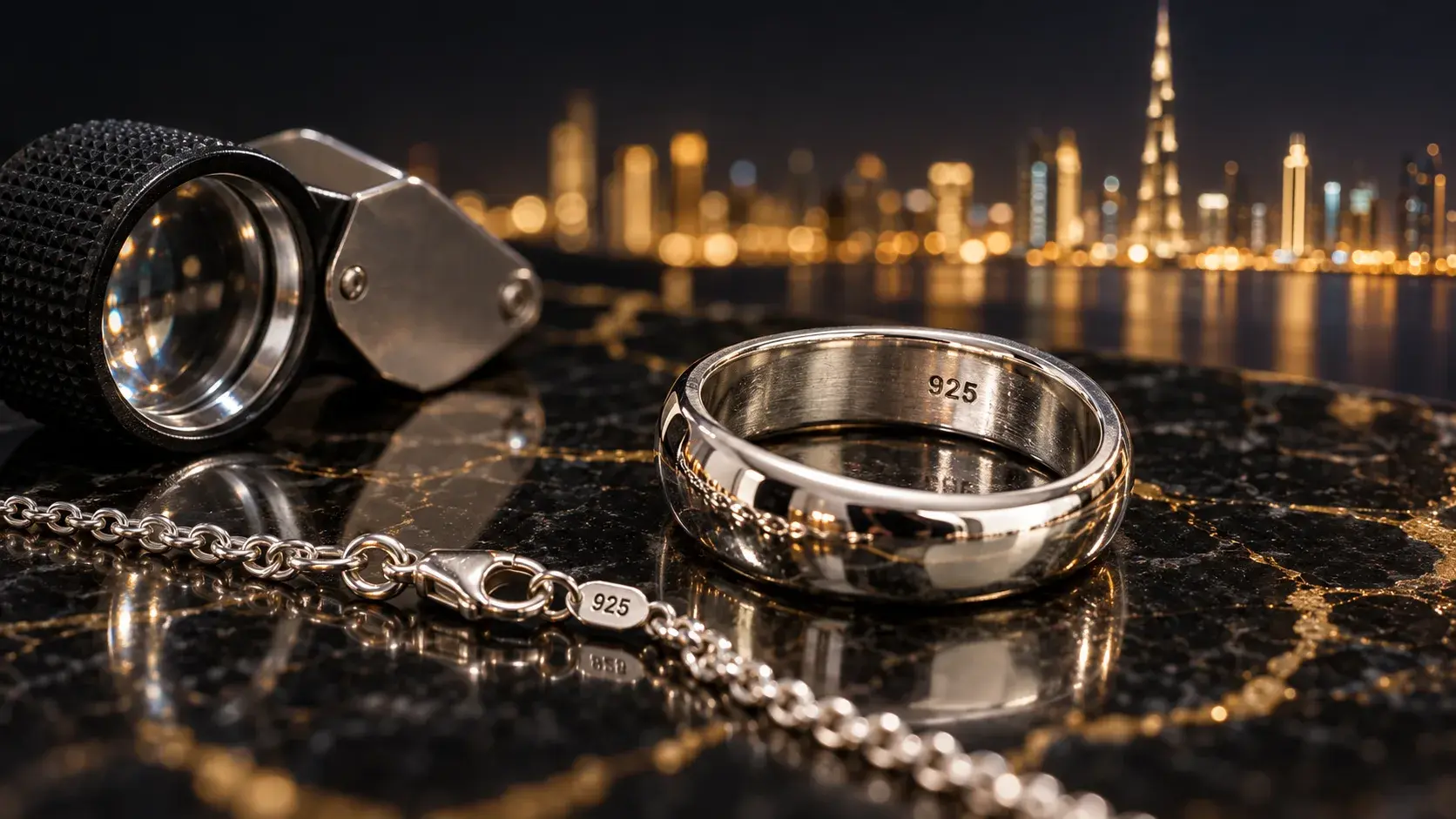
Pure silver (sometimes stamped 999, "fine silver") is too soft for jewellery you wear every day — it bends and scratches easily. So jewellers mix it with a small amount of another metal, usually copper. Sterling silver is 92.5% silver and 7.5% other metals, which is why it is stamped 925. You may also see STER, Sterling or 925 Sterling.
The stamp is usually inside a ring band, on a clasp, on a small tag near the clasp, or on the post of an earring. It can be tiny, so use your phone's camera zoom.
Six checks you can do at home
1. Look for the stamp
A clear 925 or Sterling mark is the first sign. On its own it is not proof — stamps can be faked — but a genuine piece from a reputable seller will always carry one.
2. The magnet test
Silver is not magnetic. Hold a strong magnet (a fridge magnet is too weak) close to the piece: if it jumps to the magnet, it is not solid silver. If nothing happens, that is a good sign, although some non-magnetic metals also pass this test. Clasps and springs can contain steel, so test the main part.
3. The ice test
Silver conducts heat better than almost any other metal. Place an ice cube on a larger silver piece: it starts melting almost immediately, much faster than on steel or plastic.
4. The white cloth test
Rub the piece with a soft white cloth. Real silver slowly reacts with the air and often leaves faint grey or black marks on the cloth — that is tarnish, and it is completely normal. (Rhodium-plated silver may not leave marks, because the plating protects it.)
5. Smell and look
Sterling silver has no smell. A strong metallic smell after handling, or a yellow or reddish colour showing through on worn edges, suggests brass or copper under a thin silver coating.
6. Ask for proof
A trustworthy seller tells you exactly what a piece is made of, gives you a certificate, and accepts returns. If a price looks far too low for the weight of the piece, ask why.
Labels that mean "not solid silver"
- Silver-plated, EP, EPNS: a thin layer of silver over another metal.
- Nickel silver, German silver, Alpaca: copper, nickel and zinc — no silver at all.
- "Silver tone" or "silver colour": describes the colour, not the metal.
- Tibetan silver: usually a base-metal alloy.
What about plating on real silver?
Many sterling silver pieces are finished with rhodium, a bright white metal that adds shine and slows tarnish. That is still real silver underneath — it just has a protective coat. A good seller always tells you when a piece is plated, and never calls gold-plated silver "gold".
How we do it at Dubai Silver
Every piece we sell is 925 sterling silver, stamped 925, and arrives with a certificate of authenticity. Plating and stones are named on every product page, and if an independent test ever showed that a piece we sold was not 925 silver, we would refund it in full. Read more on our Warranty & authenticity page, or browse all our silver jewellery.
#925 silver#hallmark#authenticity